
It all started in a garden, the final step in the grand genesis of life. It was called Eden, a name closely related to an Aramaic root word meaning fruitful. God formed a man from the dust of the earth, literally out of the same elements composing the cosmos. He placed him in the garden, “to work it, and take care of it.” Adam had but one rule to follow, and he failed. He and Eve, under the newfound weight of shame and guilt, hid from God and were forced to leave, to make their own way in a land of sin and death. Such is the bitter fruit of disobedience, inherited by everyone who would come afterwards. But there was a hint of an eventual deliverance of their offspring from the curse of a life of painful toil, of thorns and thistles, and a hopeless return to the dust of the earth.
After the Passover meal with his disciples, Jesus made his way with three of them to the Mount of Olives, to a garden known as Gethsemane. The name is actually two Hebrew words used to describe a place where olives are crushed under pressure into oil. He prayed alone, asking the Father if there was any possible way to achieve the redemption of all mankind other than the cross. He knew the answer. He obeyed.
And so the prophesy of Isaiah 53:5 was realized: But he was pierced for our transgressions; he was crushed for our iniquities; upon him was the chastisement that brought us peace, and with his wounds we are healed. With his last breath, Jesus was the last Adam, representing the last in a long lineage of rebellion to the Creator. Resurrected, He is the second man, the firstborn of generations reconciled to God.
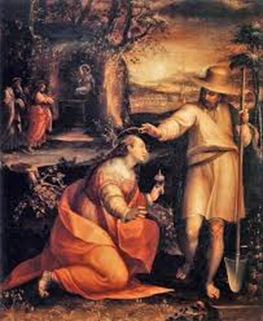
On the first day of the week, after Jesus had been buried, the disciples discovered His empty tomb. As she sat nearby, Mary Magdalen mistook the sudden appearance of the risen Jesus as . . . the gardener. What a beautifully rich metaphor! And so He is indeed, the One charged with bringing the chaos of ruined creation into a new order, into its originally intended fruitfulness, into a new heaven and earth. Finally, the mysterious parables about sowing seeds, good soil, the wheat and the weeds, pruning and the vine and the branches all make perfect sense!
 Crossing Paths