Making sense out of a senseless universe

Truth is, some folks can’t. Hopeless victims of desperate circumstance become statistics on suicide, taking themselves out of the game rather than endure another day of mental and emotional anguish. Like funny man Robin Williams. Hangs himself with his own belt. Show’s over folks. Nuthin’ more to see here. One would presume that a guy like him had it all. Family, fame, fortune. Ironically, as is the case with so many comedians like Johnny Carson and Jerry Lewis, happiness was a commodity all the money in the world couldn’t buy. Addictions, depression, broken marriages. It’s what the Smokey Robinson 1971 song is all about. “Just like Pagliacci did/I try to keep my sadness hid/Smiling in the public eye/But in my lonely room I cry/The tears of a clown/When there’s no one around.” It makes me wonder how many people actually “lead lives of quiet desperation . . .” as Thoreau wrote, wondering Why am I here and does it even matter? “. . . and go to the grave with the song still in them.”

The struggle to find and embrace significance is a prominent theme in religion, art, music, literature and everything human because it’s common to us all. It’s what we need in order to fall asleep at night, and to have a reason to get back out of bed every morning. It’s what we need to make it all worthwhile, to keep us out of the closet with a belt.

In our civilization’s ongoing quest for the meaning of life, history shows that we’ve postulated just about every theory possible, from plausible to absurd. Of course the most common efforts for explaining human existence can be found in your basic Religion 101 class along with an elective course in Introductory Philosophy thrown in. Every culture has come up with some kind of rationale to keep us from teetering into the abyss of nihilism, some sort of system with a god or gods or a higher power out there somewhere. Most ancient legends and epic narratives portray mythological deities as more human-like than divine – capricious, contriving, scandalous, fated by their faults and failures. Not much help there.

Today’s most popular options on the Religions of the World Chart have billions of followers. The self-discipline of The Buddha teaches us to meditate our way to enlightenment. Apparently many have not yet located their happy place. Or there’s the ethical politeness of Confucianism, with yin and yang, energy in constant balance, in perfect harmony, separate but equal. Which side of the taijitu are you on? Let’s crack open a couple fortune cookies and find out.

Hinduism keeps us trapped under the law of karma on a continual treadmill cycle of reincarnation. Please, just show me the way out. Remember John Lennon’s lyrics? “Instant Karma’s gonna get you/Gonna knock you right on the head/You better get yourself together/Pretty soon you’re gonna be dead.” Aren’t we all.

Even the Judaeo-Christian God of the Bible doesn’t find it necessary to explain everything. So much is hidden, mysterious, full of paradox and subjective interpretation. Not bashful about voicing complaints to the Lord about the problem of evil and suffering, psalmist King David lamented about the apparent injustices of life, that the wicked seemed to prosper while the righteous endured adversity without cause. Eventually, says the Lord, everyone will get what’s due. But for now, just wait. Have faith. Trust. Believe. I’m in control.

I think science, with all of its benefits to society and advances to be enjoyed, has coincidentally made it harder to exercise that kind of faith. Microscopes and telescopes allow us to see through that curtain of curiosity, inward and outward to worlds unimaginable. Actually, splitting the atom raises more questions than answers. Billions of galaxies spinning in an incredibly vast expanse of space reveal an intelligent designer with an extravagant sense of creativity. But why? What does it matter to me? I have a mortgage to pay and a car that needs a new muffler. By the way, what’s for dinner?

The premise of order and meaning in what we see and cannot see becomes strained, however, when our most well-intentioned spiritual convictions begin to evaporate under intense pressure. Holding on to or defending a belief system becomes especially trying when our most fervent, faith-filled, selfless prayers go unanswered. Or when we hear that a drunk driver crossed the median and plowed into a school bus full of kids returning from church camp. Several dead, dozens injured and scarred for life.

Or when an honest, hard-working man gets fired for something that wasn’t even remotely his fault. The company goes on to post record profits. Keep your resumés updated, people. Or when the poster child for perfect health and fitness drops dead while jogging. I can see the obituary now: Age 32, faithful husband, provider, father of three, gone in a whisper.

What we need is an operator’s manual, a guideline for troubleshooting through all the possible scenarios that interrupt our right to life, liberty and the pursuit of happiness. Don’t you wish that there could be an easy way to get explanations for the jack-in-the-box surprises that explode in our faces? Maybe like an Ask Abby column in the newspaper. Just write out a description of your problem. Drop it in the cosmic mailbox, and then wait for the morning news to get your answer. “Dear Desperate and Confused Planet Earth Dweller. Thanks for your letter. Here’s my advice: Leave your spouse. Move to a new town. Reconcile with your mother-in-law. Then all will be well.” Or how about a 1-800 number. “Hello, um, yes. I’d like to order a better life. Yeah, one for my four-year-old girl, the one with leukemia. And could you express ship that, please? We’re running out of time.”

There seems to be enough weeping and gnashing of teeth here in this world even before the doors of heaven close for good. So what’s left? Shaking a fist at the sky? Languishing like Job, a mere pawn in a spiritual game of chess, waiting for the final checkmate to see who wins the tournament?

Isn’t it true that often we find it so much easier to “Praise God from Whom all blessings flow” when the colonoscopy test results are negative, when the bonus shows up on the paycheck, when the college scholarship is a full four-year free ride? For me it becomes a bit more challenging when I’m calling to schedule a root canal, or when I hear about my dear friends’ baby’s death, or when someone I love is struggling to deal with impossible odds against them and I can’t help fix it. Sometimes I want to write a letter back to the New Testament’s James and say, “You know that count it all joy through trials thing? Wow, that’s a tough teaching, brother!” In reality, it’s probably an impossible perspective to learn and live without a proper spiritual frame of mind, without a strong conviction in the goodness of a God Who knows me personally and desires the best for me. Unconditionally.

Last week I faced head-on an inexplicable tragedy that once again leaves me empty for answers to the ever-nagging question of “Why?”

Tyler, a good buddy of mine, came to an untimely, sudden, violent accidental death. When someone we know is diagnosed as terminal, or is old and feeble, we know the end is eventually coming; death is stalking at the door, and we are somewhat emotionally prepared when the plug is pulled. But when a vibrant, active, happy 24-year-old combat vet full of passion for life is gone in seconds, it becomes harder to wrap our heads around. Maybe we can’t. That’s why it’s so vexing. So troubling, so disturbing, and especially so much more painful now during a time reserved for the expression of peace, joy and holiday cheer.

I am deeply grieved at his passing, but I heard something during the funeral eulogy that might help me get through this. Encouraging the bereaved to stay strong through the heartache of this calamity, his pastor quoted from Chapter 5 of Paul’s Letter to the Romans. I like The Message version:

“We [those who are true followers of Christ] continue to shout our praise even when we’re hemmed in with troubles, because we know how troubles can develop passionate patience in us, and how that patience in turn forges the tempered steel of virtue, keeping us alert for whatever God will do next. In alert expectancy such as this, we’re never left feeling shortchanged. Quite the contrary—we can’t round up enough containers to hold everything God generously pours into our lives through the Holy Spirit!”

Several key ideas here to ponder out of many: “ . . . for whatever God will do next.” Reality check: This is God’s universe, and so far He hasn’t consulted with me for my opinion of His agenda. Maybe I need to reread the final five chapters of the Book of Job. “Then the Lord said to Job, ‘Shall he that contendeth with the Almighty instruct him? he that reproveth God, let him answer it.’” (Job 40:1-2) KJV

I may never know all the reasons why life seems at times to unravel into a helpless heap, like a laundry basket full of soiled clothes. Hard to admit it sometimes but I will find myself in a better place when I acknowledge Who is really in control. That being said, as I develop passionate patience I suspect that God and I will continue to have serious conversations regarding my perplexities, my pain and my frustration when I’m hemmed in with troubles. I need to learn how to bear up better in the fiery forge tempering my soul. Instead of shortchanged, I need to see myself abundantly blessed, my containers ready to overflow with enough hope to spill over onto those who are desperate for a reason to carry on through their own heap of troubles.

I’m going to have a Merry Christmas and a Happy New Year because, in spite of my time of grief and loss concurring hand-in-hand with this season of Comfort and Joy, I choose to hope that all things will ultimately work together for good (Rom. 8:28), and to see that from God’s perspective, nothing in this universe is ever senseless.

A Christmas Carol

Today we say “Happy Birthday” to Charles Wesley, born in Epworth, England, 1707. Often eclipsed historically by his better known brother – Methodist co-founder and fiery preacher, John – Charles has nonetheless left a significant mark on the Protestant persuasion, composing literally thousands of church hymns during his lifetime of 81 years.

Preaching in the open air to tens of thousands, John did most of the preaching, while Charles led the faithful in hymns at revival meetings. They were not always welcomed, however, sometimes met by raucous mobs who threw stones, dirt and eggs in their faces. Charles WesleyTraveling by horseback from one town to the next, if Charles thought of a hymn, he would detour to the house of the nearest acquaintance, demand a pen and ink and write it down.

Personally I have heard only a few of those inspiring melodies, but during the Christmas season I have frequent opportunities to hear my favorite, “Hark! The Herald Angels Sing.” Usually sung robustly by a festive choir surrounded by sparkling candle lights and streams of ornamental holly, it’s an almost must-do song for traditional Christmas Eve services. A thundering pipe organ accompaniment always adds an element of soul-stirring intensity to the performance.

My favorite lyric in the entire piece is simply “God and sinners reconciled,” a short but dynamic phrase that to me expresses the whole idea of why we actually celebrate a day called Christmas. It’s John 3:16 and all the rest of the Bible presented in a way that anyone, anywhere, of any age can understand. No doctorate in theology needed. Adam broke the relationship with God through disobedience. Jesus, the last Adam and the Second Man, made it possible to get back to the original plan: eternal life with the Creator, on a personal relationship level.

Reconcile is a word often used as a legal and accounting term. It can mean to win over to friendliness; to cause to become amicable; to settle a quarrel or dispute; to bring into agreement or harmony, make compatible; to restore. These definitions also make perfect sense describing what salvation is basically all about. So when I hear this blessed carol during the next few days, my heart will pound a little bit stronger knowing that the animosity between God and myself is gone because of a baby born in Bethlehem. “Mild he lays his glory by, Born that we no more shall die, Born to raise us from the earth, Born to give us second birth.”

Bravo, Charles Wesley! The herald angels are still singing.

11/22/63

Seems as though most of my memories
of John F. Kennedy are archived in
grainy black and white.

The televised campaign debates with a
sweaty Dick Nixon, who looked like
a stiff cardboard prop in the shadow
of the bigger than LIFE magazine
war hero bred for achievement by
Massachusetts’ premier political family.JFK speech

The bright but bitterly cold inaugural
on the steps of the Capitol, frozen under
a nor’easter snowstorm’s fresh blanket
of dazzling white, a distinctive
backdrop for a fledgling president’s epic
“And so, my fellow Americans, ask not”
speech, challenging us in a valiant
call to arms against tyranny, poverty,
disease and even war itself.

The televised series of White House
tours graciously hosted by a sophisticated,
shyly soft-spoken Jackie who assured us
that it was just as much “our house.”

The candid photos of handsome toddler
John John playing hide-and-seek
under the desk of the most powerful
man on earth.

The who’s-going-to-flinch-first live TV broadcast
to an on-the-edge-of-our-seats audience by a
stern and deadly serious JFK demanding that a
raging Russian remove his nuclear missiles
from Cuba – or else. We held our national breath,
praying, all eyes fixed on the doomsday clock.

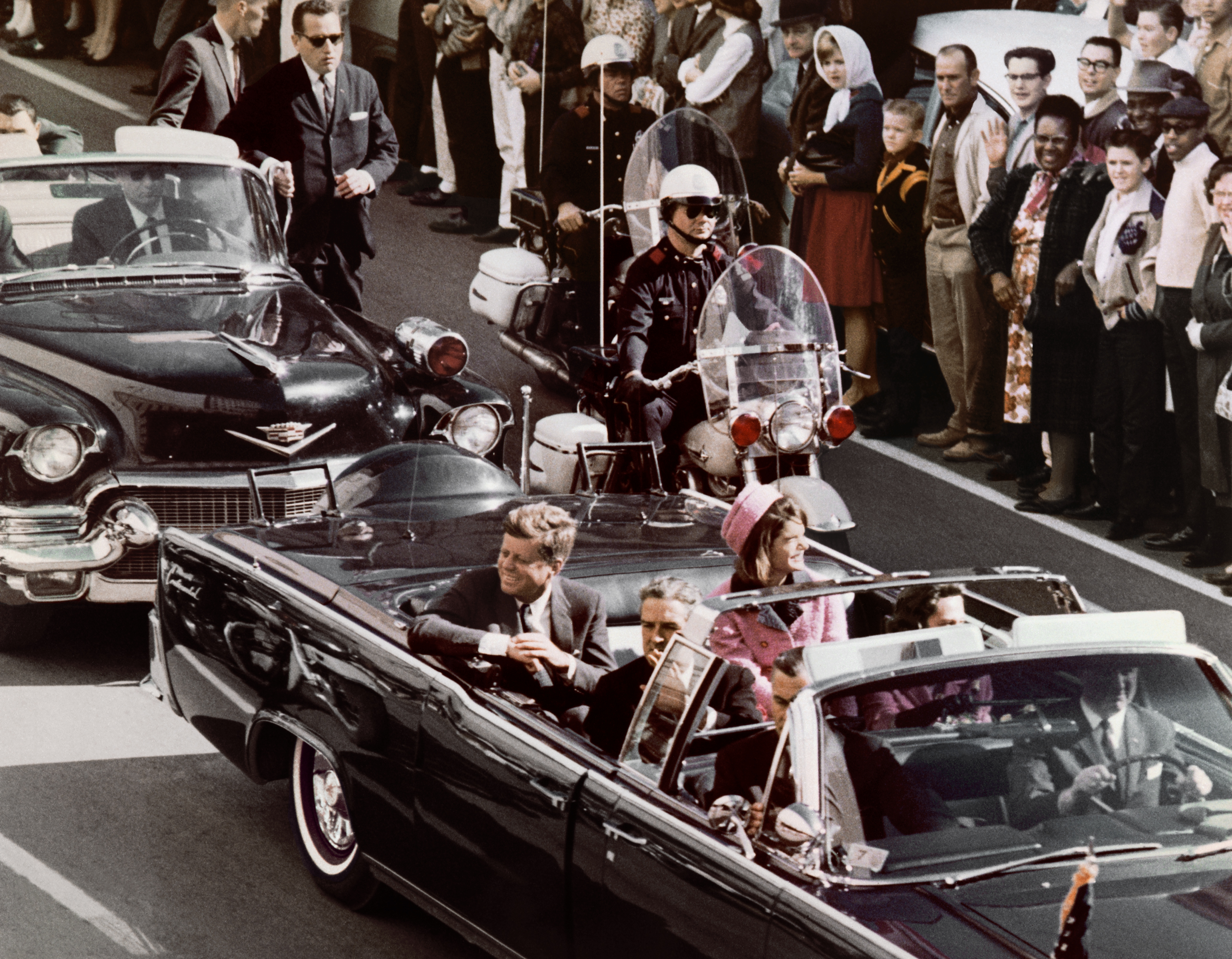
And then came that day in Dallas.
It started out with smiles and waves
– and color.

22 Nov 1963, Dallas, Texas, USA --- President and Mrs. John F. Kennedy smile at the crowds lining their motorcade route in Dallas, Texas, on November 22, 1963. Minutes later the President was assassinated as his car passed through Dealey Plaza. --- Image by © Bettmann/CORBIS

Like heaven’s giant spotlight suspended
in a flawless azure big-as-Texas sky,
a beaming golden noontime sun illuminates
a cheering crowd at Love Field,
all reaching out for a once in a lifetime
touch from the chief executive’s hand.
The First Lady, wearing that now iconic
strawberry pink and navy trim
Chanel wool suit and matching hat,
cradles so tenderly an ill-fated bouquet
of red roses, too soon abandoned on a
blood spattered seat of the presidential
Lincoln Continental where the life of
Camelot’s king was lost and everything
suddenly faded back to black and white
again. For a very long time.

Is Paris burning?

The question was asked by Adolph Hitler in August of 1944 after ordering his military governor/general Dietrich von Choltitz to destroy the City of Lights rather than have it fall into the hands of General George Patton’s Third Army, just miles away from liberating the heart and soul of France.

After the horrific attacks of last night on specifically targeted groups of an innocent civilian population –– couples and families at a restaurant casually enjoying a meal, exuberant young people at a rock concert, spirited soccer fans –– again Paris, and France and Europe and indeed all of western civilization are in the cross hairs of madness. Jihad is in the early stages of metastasizing from the traditional borders of the Middle East and is headed to a town near you and me.

A force to be reckoned with from the mid-thirteenth century until World War I, the Ottoman Empire with Islam as the official and only religion left a permanent bloody fingerprint on the West. The conquering Turks absorbed, adapted and modified the economics and sociology of the lands they occupied and the cultures of the peoples they dominated. Yes, the corollary effects on literature, architecture, language and art can still be seen today from Spain to Constantinople. And yes, there was an aspect of genteel sophistication to the ways of the Sultan that may have to some degree balanced out prejudicial brutality against Christians and Jews.

Not so with ISIS. We’ve seen news reports and videos documenting these barbaric henchmen in action, destroying irreplaceable religious and cultural artifacts in ancient sites throughout Syria and Afghanistan, archaeological relics that survived for millennia, now broken into rubble. They want to erase every trace of our history and replace our future with a worldwide Islamic Caliphate, one that excludes everything that we love and hold dear: our faith, our family life, our freedom. Now becoming increasingly frequent and ambitious, these terrorist acts show the unmasked, lethal side of modern radical Islam and its agenda. What is it that we don’t understand about “Death to Infidels?”Paris

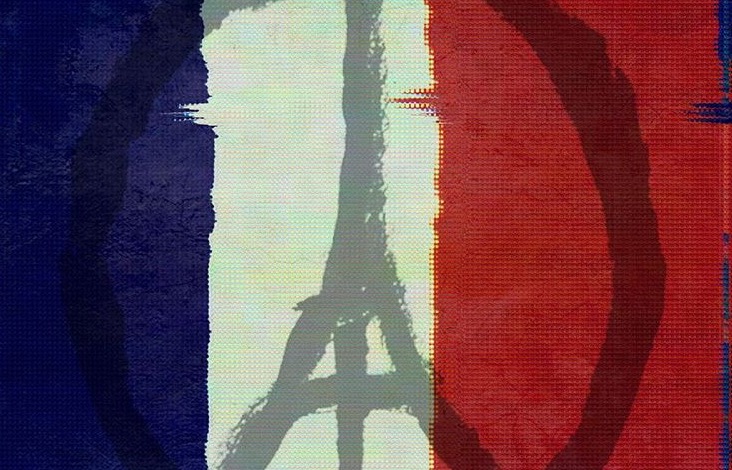
The Eiffel Tower went dark last night, maybe saving it from being an easy target, maybe just to show that the spirit represented by one of the most recognizable landmarks in the world was severely wounded: the joie de vivre that has made Paris the exciting, romantic magnet it has been for centuries. Perhaps today we need to acknowledge our fraternité with the shocked and mourning citizens of our nation’s oldest ally, France. Maybe now more than ever we all need to recognize and declare loud and clear, “Je suis Paris.” — “I am Paris.”

Healing Now In Checkout Lane Number 4

Ever been pushing your cart around the grocery store when suddenly the canned background music abruptly stops with a crackle and a voice comes over the speaker saying something like, “Uh, cleanup in aisle seven. Um, Joe, you’re gunna need a wet mop.” A few minutes later a reluctant teenage boy shows up dragging a mop and bucket to deal with the accidental consequences of a 20-ounce jar of kosher dill pickles hitting the floor.

Recently I heard an account about a very unusual and unexpected announcement over a grocery store PA system relating a message we just don’t hear every day, but maybe we should. My friend Jerry told me about a young man he knows who without reservation lives his Christian life out in the open, ready for opportunities to share his convictions with anyone who might cross his path. One evening this fellow, let’s call him Mark, was on his way home from working late and needed to pick up a couple items from the store along the way. While standing in line to check out he noticed an obvious expression of discomfort on the face of an elderly lady right in front of him. She gingerly pressed a trembling hand up against her left ear while slowly unloading items from her cart. Without hesitating, Mark asked her if she was okay. “What?” she said, looking up, a little startled, probably wondering why a complete stranger would even be speaking to her. He repeated the question. “I’m sorry,” she said, in a feeble voice, “but I can’t hear very good. I have hearing loss and right now I have an ear infection.” Mark’s next response was automatic. “Well, would you mind if I prayed for you?”

She stared blankly at him for what seemed like minutes, then with a shallow sigh said, “I guess so.” Mark closed his eyes, put his hand on her shoulder and prayed a simple, brief but powerful prayer for her ears to open and for complete healing, in the authority of Jesus’ mighty name. Startled, she looked back at his face, now gleaming with delight that yet another opportunity had presented itself to express his faith in a mighty God, for His glory. “Hey, hey,” she blurted out, stammering for the right words. “I can hear you. I can actually hear everything, real clear. And I don’t feel any pain.” The checkout girl at the register who had been observing the entire encounter with one eye on the groceries and one ear into the conversation was now weeping, overwhelmed by what she had just witnessed.

Then Mark had a wild idea, prompting a bold move inspired deep in his spirit. “Ma’am, would you mind if I used that microphone and made an announcement over the store speakers?” The clerk still dumbfounded and in a kind of robot-like manner hands it over. Mark clears his throat and clicks on the mic. “Attention shoppers!” What’s next? A five-minute special in Frozen Foods? Not tonight. “God has just healed a lady right here in Check Out Lane Number Four. And He’s not done.” He pauses, ignoring a little audio feedback squawking noise. “Someone here has hip problems and He wants to heal you. Someone else has a crippling disease in their hands, and He wants to heal you, too!” Immediately the atmosphere throughout the store changes. It’s like electricity charging the air, like an invisible force blowing around stacks of canned soup canada-safewayand right through boxes of breakfast cereal.

At this point, wary shoppers begin sheepishly peering around end caps at the front of the store, curious to find out if they actually heard what they thought they heard. Out of nowhere a large woman on a motorized cart aims headlong toward Mark. She’s steering with one hand and waving the other. “Mister. Mister, it’s me. I have hip problems.” He motions her on towards him through the little group that has started to gather, waiting to see what happens next. He prays. She has a hard time catching her breath, almost delirious. “I don’t know what’s happening to me,” she gasps. She begins to feel heat wrapping around her hips where intense pain had been endured without help for so many years. Healing starts to flow, like a fire through bone and muscle and sinew. Now she is standing, without pain, sobbing like a baby, hugging Mark.

Suddenly, a thin, tired-looking man in his mid-fifties pushes past the crowd surrounding Mark. “Wait. I’m who you’re looking for,” he calls out, twice. He has abandoned his cart in the produce section, walking briskly with both forearms out in front of his chest, hands upright. Teary-eyed, he explains to Mark and the growing number of stunned onlookers that he is a high school music teacher, a composer, but arthritis and carpel tunnel have gnarled his hands to the point of being useless. “I can’t work. I can’t play the piano anymore. Help me. Please.” Another prayer. Another miracle. The man grasps his hands together tight, in prayer-like fashion, completely whole and healed, on the spot. He’s giddy, shaking. Mark smiles.

And then it was all over –– in less than five minutes. Bar code scanners began beeping again. Shoppers returned to their lists. Mark checked out and headed for his car, some of the folks staring through the storefront windows, watching him disappear from view into the darkness of the parking lot. For him, this evening was not exceptional. It’s the norm. It’s walking out a simple life of faith where the natural and the spiritual coexist, where the Kingdom of God, as Jesus said, is at hand. The reality of the unseen world was made manifest that night, when faith brought the presence of God to the Safeway on 6th Avenue and Spencer Street. By the way, Mark does not have the gift of healing. He has no religious agenda. No evangelism tracts tucked into his back pocket, looking for converts. But no matter where he goes or what he does, he just believes. That’s what true discipleship is all about.

Worth a thousand words

We’ve all heard the expression. A picture is worth a thousand words. But this particular photo puts me at a loss for any amount of words. Where media coverage phrases like “ongoing migrant crisis” fall feebly short, it bluntly conveys an ugly reality of just how desperate the situation facing many refugees has become.

It’s one of several photographs that went viral earlier this week, hopefully shocking the world from complacency and ignorance concerning the plight of millions of people trying to escape the seemingly endless horrors of war in the Middle East. The photos and the dreadful circumstances they portray are a “stark testimony of an unfolding human tragedy that is playing out in Syria, Turkey, and Europe, often unwitnessed,” wrote Kim Murphy, a news editor at the Los Angeles Times.

Well, now thanks to this heart wrenching photograph we are forced to witness a disturbing glimpse into a still frame of this unspeakable calamity, and we see more than a distant, inconsequential-to-us humanitarian crisis out of control.

What we see is the appalling outcome of a fiberglass boat packed with 12 desperate people aboard capsizing off the coast of Turkey, after just minutes into their journey. Their destination – the Greek island of Kos, only 2.5 miles away. An estimated 2,000 people are making the same short but dangerously rough sea crossing every day. But these folks, including three-year-old Aylan Kurdi, his five-year-old brother and their mother, all perished in an effort to escape the hell on earth that is now Syria, drowning instead in the Mediterranean, ironically their hoped for passageway to freedom and a new life in the West.

What we see is little Aylan, washed ashore on the beach, like debris cast off by a careless humanity. When power hungry men time and time again rationalize the insane depravity of bludgeoning the life out of each other, either with clubs or swords as in centuries past, or with the far more sophisticated and effective modern weaponry of our age, we all suffer. The bitter vintage of warfare is also drunk far beyond the blood soaked battlefield. The grim harvest of brutality spares neither mothers nor their children, and in this case, the iron scythe of death too soon struck down an innocent Kurdish family hoping for a new life beyond the grip of an insatiable monster known as terrorism.

What we see yet again is another vivid portrait of a senseless tragedy. We feel again that deep, despairing heartache, and ask again the unanswerable question, “Why?”

We will find no adequate consolation in this world for suffering and loss, especially one of this magnitude, the death of a beautiful toddler, just like one of those little boys we see playing ball down the street in our own neighborhood. Yet there is always a glimmer of light, even in what may appear as utter darkness, when we rise above the most brutal circumstances of life with faith. “I have told you [about the realities of this life] so that you may have peace in me,” Jesus said. “Here on earth you will have many trials and sorrows. But take heart, because I have overcome the world.”

Rest in peace, Aylan. You are finally free. Free indeed.


Peonies

Why do you droop so low?
One would think that the Creator
might have provided a sturdier stalk
to support the mass of such an explosive
bloom of pink and magenta and
white at the end of every May.

peoney5

Is it because you know
your fate will be to end up in a coffee can
wrapped in foil at gramma’s gravestone
on Decoration Day, among the plots
of long dead soldiers, nameless stillborn infants
and so many whose inscriptions and memory
the weather and time have erased?
Is it too much to bear,
all this weight of grief and loss?
Or is it just because last night

it rained?

A World Shaken

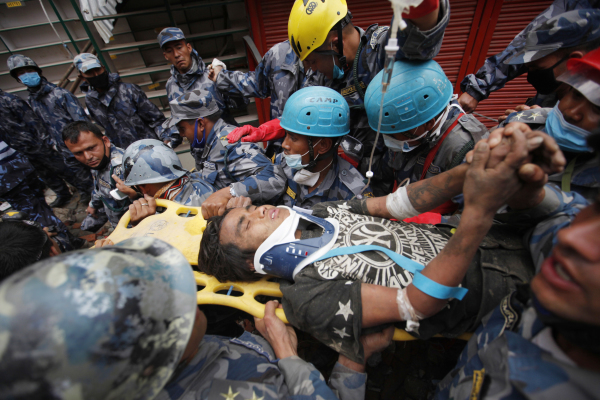
When the earth shook in Kathmandu on April 25, it dumped a seven-story building on top of 15 year-old Pemba Tamang. The boy was trapped under the weight of a world that for him and thousands of others literally tore apart and collapsed like a scene from a sci-fi doomsday movie.

Then five days passed. Helpless and alone, he waited, and survived. I figure that comes to about 7,200 minutes. Even a couple minutes can be scary if you find yourself crushed under debris, unable to move. I can’t imagine his plight for hour after hour in the dark, wondering what’s next as tremors continued for days, each rumble threatening to sever the tiny thread of life he desperately clung to. Finally a combined Nepalese and American disaster response team heard his cries for help, and brick by brick dug him out. “I thought I was just hallucinating again,” he said, when light finally broke through between the concrete slabs that wedged him into a deep crevice. Covered in dust from head to foot and squinting in the bright sunlight, he was surprisingly coherent and responsive, enough so to manage a little hand wave to a cheering crowd of jubilant onlookers, desperate for good news.

nepal-earthquake-survivor-1I will try to remember Pemba’s struggle and his remarkable patience next time I have to wait at the grocery store check-out line, or when the cars in front of me aren’t moving quickly enough at the Starbuck’s drive-through. I will remember that any small inconvenience in my so-called busy life is nothing compared to five days in a hole. I will also think about the parallel between this story and the way the God of the Bible is always on a rescue mission, searching for the lost, for those who are buried under tons of personal rubble, trapped without a chance of escaping on their own. I can personally testify that He hears even the faintest cry for help, and won’t stop digging for us until His saving hand pulls us out of what could have been our spiritual grave. We are told that “. . . there is more joy in heaven over one lost sinner who repents and returns to God than over ninety-nine others who are righteous and haven’t strayed away!” (Luke 15:10 NLT) That sounds like a cheering crowd to me.

Remembering the unimaginable: Holocaust

Today the world marks the 70th Holocaust Remembrance Day. I was reluctant to write about this, a nightmarish subject characterized with such gravitas, the heaviness of which still haunts survivors and their families. Visitors report that like manifest evil it weighs down the very atmosphere at various sites of former concentration camps all across Europe with the ghosts of those victimized by the darkest side of what one human being is capable of doing to another. Words like atrocities and genocide fall short, are too sterile. Only documentary photos we want to turn our faces away from can convey adequately the horror and suffering endured by millions of innocent men, women and children just because they were Jews. That’s it. jewish_family1They were Jews – artists, merchants, writers, doctors, farmers, craftsmen, grandparents, little school children and old folks (the list is endless) all gone up the chimneys or discarded like trash in mass graves. Six million souls who might have changed the world with their unique talents and skills, and love. But the injustice of their fate could in fact change the world, if we remember, if we say over and over, “Never Again!” But the future may be out of our hands.

The lessons of the Holocaust are obvious, but the world is not learning. Israel and Jews around the world are once again an easy target of hatred. Just weeks ago, the head of the Iranian Revolutionary Guard said that, “The destruction of Israel is non-negotiable.” Iran’s supreme leader Ali Khamenei has outlined a nine-point plan for the elimination of the Jewish State. Sadly but not unexpected, neither comment provoked a major outcry in the international community. Actually terrorist threats from Islamic militants driven by jihad put all of us infidels at the risk of imminent annihilation. So the shadow of the Master Race psyche seems alive enough to once again darken civilization as we know it.

In spite of countless efforts throughout history to destroy an entire race, let’s keep in mind that God’s chosen people are His forever. From a Biblical perspective though, things will eventually get worse before they get better. The Good Book in hundreds of prophetic verses clearly reveals that the ultimate destiny of the world is inseparable from God’s plans for Israel, that Jerusalem would become a “burdensome stone” for all the world, and that before the end, all nations will turn against Israel. “Then shall the LORD go forth, and fight against those nations . . . And the LORD shall be king over all the earth.” Zach. 14:3, 9. Judgment is coming for her enemies, and mercy for the house of David. Like it or not and believing the Bible or not, with every nightly news report and headline from the Middle East it appears that we are on the inevitable road to the final holocaust: Armageddon.

He is risen!

A look at the history of the holiday we call Easter reveals strange associations between the Christian faith and the seemingly unrelated practices of early pagan religions. Many Easter traditions practiced today, including colored eggs and the beloved Easter colored_peepsbunny, have all evolved from pagan symbols, traditions and from myths about the ancient Babylonian goddess, Ishtar.

Goddess of romance, procreation, and war, Ishtar was also worshiped as the Sumerian goddess Inanna. An account of her descent to the Underworld and subsequent resurrection is contained in one of the oldest writings ever discovered: the Babylonian creation myth Enuma Elish and the epic story of the Mesopotamian demigod named Gilgamesh, recorded about 2,100 BC.

The most famous of the myths of Ishtar tells of her descent into the realm of the dead to rescue her young lover, a vegetation god forced to live half the year in the Underworld. When Ishtar approached the gates of the Underworld, ruled by her twin sister, the goddess of death and infertility, she was refused admission. IshtartabletDuring Ishtar’s absence, the earth grew barren since all acts of procreation ceased while she was away. Ishtar threatened to break down the gates and release all of the dead to overwhelm the world and compete with the living for what food remained until she was allowed to enter and plead her case with her twin.

Easter is allegedly named for a Saxon goddess who was known by the names of Oestre or Eastre, and in Germany by the name of Ostara. She is a goddess of the dawn and the spring, and her name derives from words for dawn, the shining light arising from the east. The term estrogen also stems from her name. Also a fertility goddess, Ostara is said to bring an end to winter, with the days getting brighter and growing longer after the vernal equinox.

bunnies in eggThe March Hare was regarded as sacred in many ancient traditions and was associated with the moon goddesses and various deities of the hunt. Given their repute for prolific mating and reproductivity, it is understandable that the rabbit came to represent lust, sexuality, and excess in general. The Easter bunny character first appeared as a 16th-century German tradition, which said that if well-behaved children built a nest out of their caps or bonnets, they would be rewarded with colored eggs. The legend became part of our own folklore in the 18th century, when German immigrants settled in America.

In contrast, our Christian faith is founded on everything the Bible teaches about the source of life and eternal life –– on the One who conquered death through death, He who holds the keys to death and the afterlife, Jesus Christ. The apostle Paul clearly advises a young Timothy, “If you point these things out to the brothers, you will be a good minister of Christ Jesus, brought up in the truths of the faith and of the good teaching that you have followed. Have nothing to do with godless myths and old wives’ tales; rather, train yourself to be godly. For physical training is of some value, but godliness has value for all things, holding promise for both the present life and the life to come.” (1 Timothy 4:6-8)

I love jelly beans and Russell Stover’s marshmallow eggs covered in milk chocolate as much as anyone, I suppose. But knowing what we know, my family and I, at the risk of being called the Easter Grinch, might hesitate just a little to say “Happy Easter.” We prefer instead to proclaim, along with the multitude of saints gone before us, “Christ is risen!” followed by an affirming, “He is risen, indeed!