• About

Crossing Paths

~ Intersections can reroute our destinies forever

Crossing Paths

Author Archives: michael schinker

More thoughts about JFK

04 Wednesday Jun 2025

Posted by michael schinker in John F. Kennedy, Uncategorized

≈ Leave a comment

Tags

history, jfk, jfk-assassination, politics

Recently I was asked to write a memoir about where I was when I heard about the assassination of President Kennedy and how it affected me. So, here goes:

I was a senior at Creighton Prep High School, in the middle of art class. It was a Friday, just after lunch period. An announcement came over the speaker system informing us that the President had been shot during a motorcade through Dallas, Texas, and was rushed to a hospital. We were led in prayers for what suddenly became a shockingly serious situation for Kennedy and the country. Efforts to save him were futile. He was declared dead at 1:00pm Central Time.

A schoolmate’s father died of a heart attack on the same day. Two sad funerals occurred then on Monday. Many tears were shed.

Our family had a more than President-citizen relationship with JFK. My Aunt Helen, my mom’s sister, was a major player for the Democrat Party of Nebraska’s effort to promote Kennedy’s campaign for the presidency in 1960. Amazingly, for her efforts she was appointed personal secretary to Robert Kennedy when he became Attorney General in January of 1961, a post she held until he resigned the office to run for the U.S. Senate from New York.

On the evening of November 20, 1963 Helen had actually spoken with the President at an exclusive party celebrating the 38th birthday of brother Robert. The following morning, John and Jackie left for Texas.

From the minute CBS News anchor Walter Cronkite battled to hold his emotions in check to inform the world of JFK’s death, through a weekend of non-stop live black and white TV broadcast updates until the interment, life was on hold. We were eating Sunday breakfast in the living room when we watched someone later identified as Jack Ruby shoot Kennedy’s alleged assassin Lee Harvey Oswald on live TV. I almost choaked on my scrambled eggs.

My Uncle John, Helen’s and my mother’s brother, who at the time was living in Falls Church, Virginia, and working for the CIA, somehow against a crushing crowd of onlookers, made it into Arlington Cemetery. The funeral procession was long and thousands had gathered along the route across the Potomac to catch a glimpse of it. John, a decorated veteran of World War II himself, saw several news photographers standing on tombstones to film the event. After chasing them away, disgusted, he went back home, missing the historic horse-drawn caisson headed to the gravesite.

I never met the man. I was at home babysitting my toddler brother when the family went to the social gathering in June of ’59. Even so, after his death I gradually became more impressed, more affected, by his charm, eloquence, charisma and youthful energy, all qualities usually foreign to a resident of the White House; by the storybook Crusader-Knight mystique of a dynamic leader fearless in his vision for social justice and the race into space; with his communication skills, and ability to inspire a nation with his “Ask not” challenge to patriotism and national pride. In many ways, he modeled the title of his bestselling book, Profiles In Courage. That final day in Dallas hurt me enough to write from my heart a poem 52 years later, to lament the loss of so much more than a president: The loss of my generation’s Camelot.
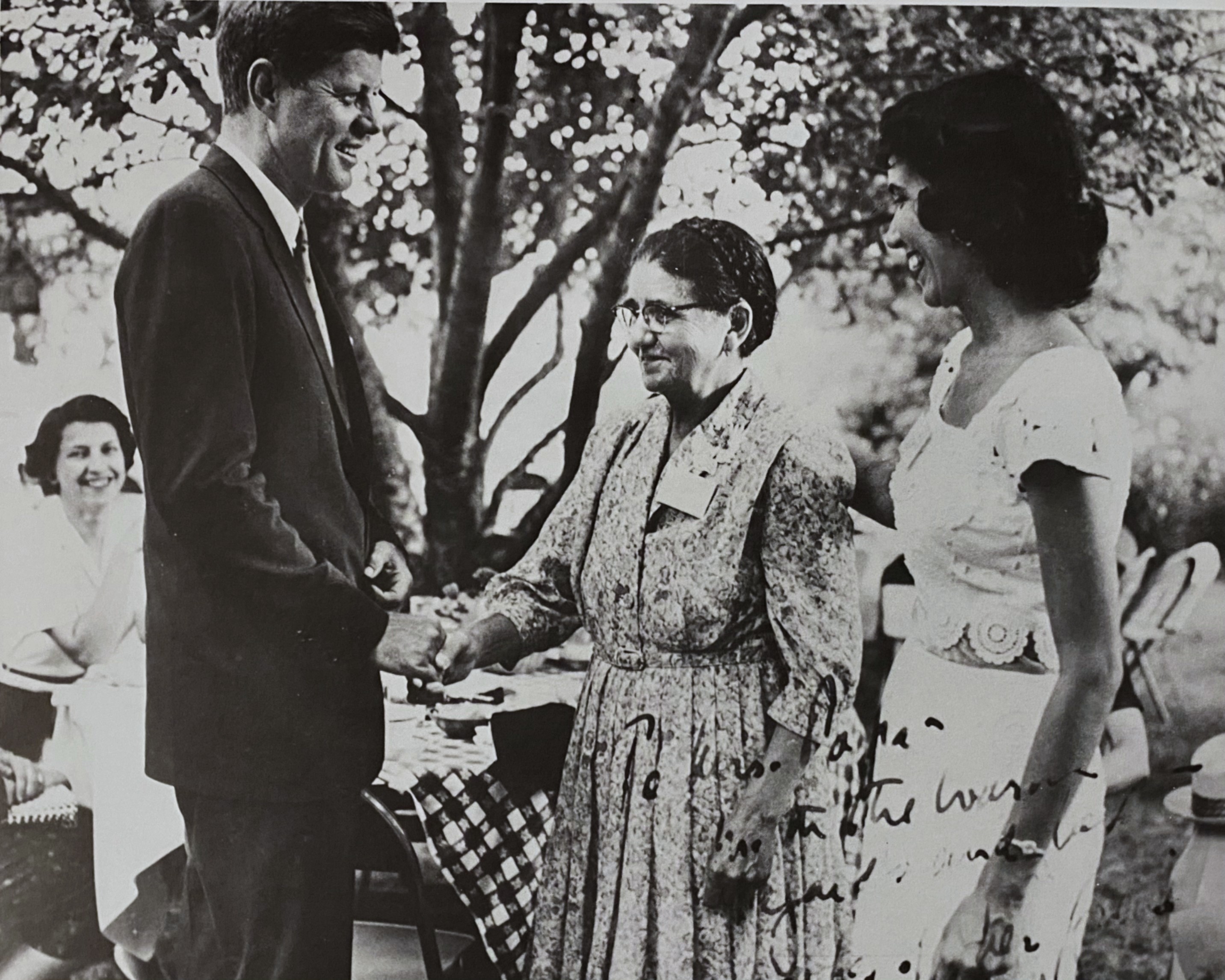
PS. My grandmother pictured here with Kennedy also shows my mom, far left and Helen introducing the then Senator from Massachusetts prior to his declaring his presidential candidacy. The original 8 x 10 was personalized with the following: “To Mrs. Popa – with the warm regards and best wishes of her friend. John Kennedy.” She is featured in my “Immigration, 1914” post, October 19, 2024. Maybe I will write a story titled “Romanian Peasant Meets President-to-Be.”

Happy Mother’s Day

11 Sunday May 2025

Posted by michael schinker in Mother's Day, Uncategorized

≈ 1 Comment

How should I describe the mother of my children,
whom I celebrate today?
She’s my spouse? Too legalistic. My better half?
How about my better eighty percent. My best friend?
Sounds like high school besties. Soul mate?
Hmm. Getting closer but not quite adequate enough.
More so would be: the face of true Love.
She’s the one who saves me from teetering over the edge.
She turns my head back to reason lest I fall on my own sword.
She is the superglue that binds together the
fractures in my universe.
She is the ladder bridge across life’s every
crevasse on my path to summiting my destiny.

Wait a minute! Isn’t all that what God is supposed to do?
True. But God wears people in this world,
and He’s wearing the mother of my children quite well.
The face of true Love looks like my
Judith Ann.

Jelly Beans

11 Friday Apr 2025

Posted by michael schinker in Easter, Holidays, poem, Uncategorized

≈ Leave a comment

It must be Easter time because
they have made their appearance.
Bagsful in the grocery store candy isle
and now into a fancy dish on our table.
I love ‘em. That attractive, tempting palette of color.
Some give away their flavors without a doubt.
Orange is orangy. Red is cherry. Green, sour apple.
Kids don’t like the Black Licorice. Just older folks.
What about the one that’s sadly pale?
A mystery flavor. Coconut or Cream Soda?

I asked Alexa “What are jelly beans made of?”
She immediately came back with
“The basic ingredients of jelly beans include
sugar, tapioca or corn syrup, and pectin or starch,
and a shellac of Confectioner’s glaze.”
Mmmm. Love the shellac.
Whatever the content, they are perennially
a chewy deliciousness that disappears
quite quickly from my Easter basket.

But not before the chocolate.

11/22/63 Revisited

27 Thursday Mar 2025

Posted by michael schinker in assassination, John F. Kennedy, Uncategorized

≈ Leave a comment

Tags

books, history, jfk, jfk-assassination, politics

Recently, thousands of documents relating to the JFK assassination have begun to be made public. Whether the truth about what really happened that day may be found or not, the Kennedy years are a moment in time that older folks like me will not forget. That considered, I thought now would be a good time to revisit my thoughts from a post on Nov. 22, 2015.

Seems as though most of my memories of John F. Kennedy are archived in black and white:

The TV campaign debates with a sweaty Dick Nixon, who looked like a stiff cardboard prop in the shadow of the bigger than LIFE magazine war hero bred for achievement by Massachusetts’ premier political family.

The bright but bitterly cold inaugural on the steps of the Capitol, frozen under a Nor’easter snowstorm’s fresh blanket of dazzling white, a distinctive backdrop for a fledgling president’s epic “And so, my fellow Americans, ask not” speech, challenging us in a valiant call to arms against tyranny, poverty, disease and even war itself.

The televised series of White House tours graciously hosted by a sophisticated, shyly soft-spoken Jackie who assured us that it was just as much “our house.” The candid photos of handsome toddler John John playing hide-and-seek under the desk of the most powerful man on earth.

The who’s-going-to-flinch-first live TV broadcast to an on-the-edge-of-our-seats audience by a stern and deadly serious JFK demanding that a raging Russian remove his nuclear missiles from Cuba – or else. We held our national breath, praying, all eyes fixed on the doomsday clock.

And then came that day in Dallas.

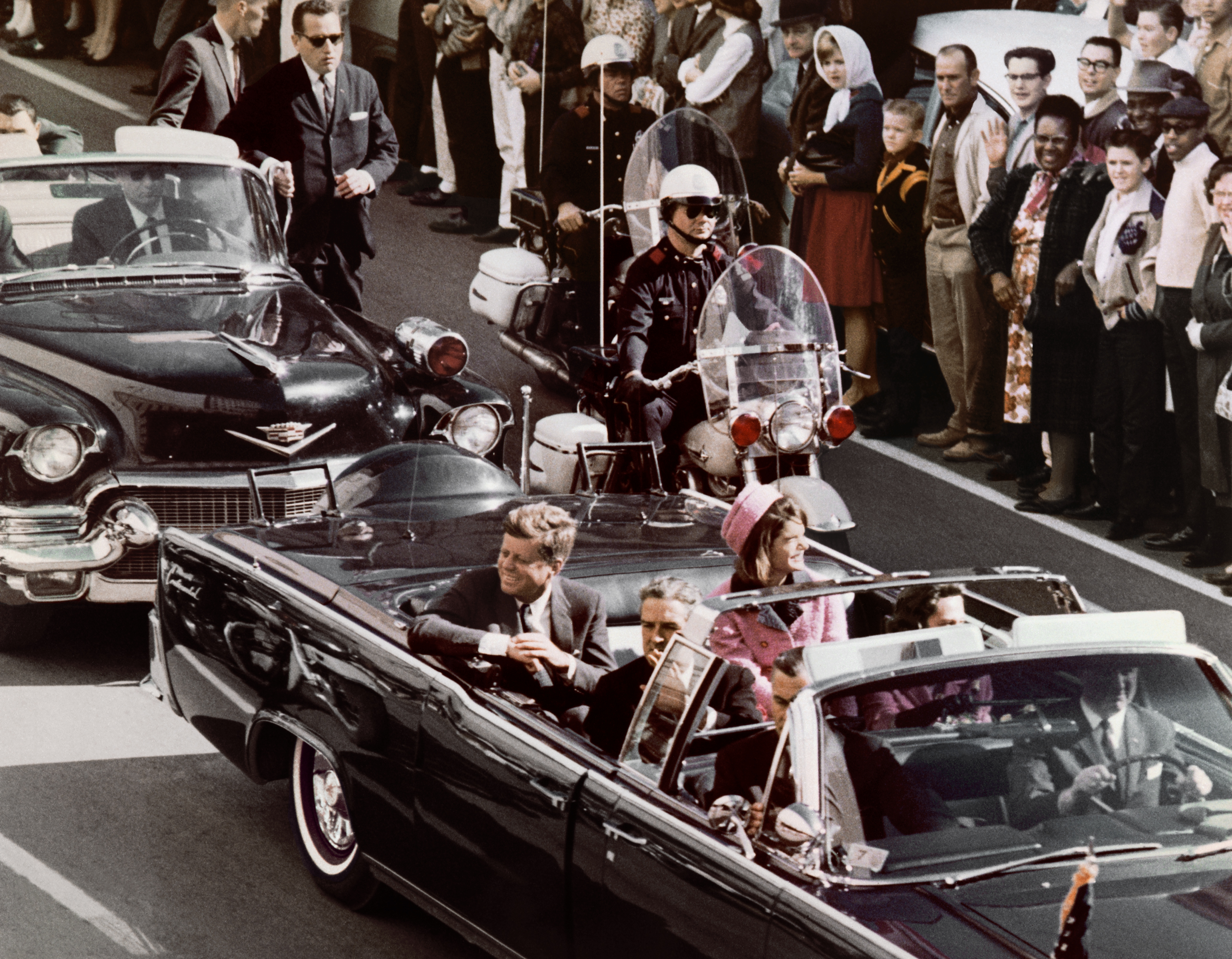
It started out with smiles and waves – and color. Like heaven’s giant spotlight, suspended in a flawless azure big-as-Texas sky, a beaming golden noontime sun illuminates a cheering crowd at Love Field, all reaching out for a once in a lifetime touch from the chief executive’s hand. The First Lady, wearing that now iconic strawberry pink and navy trim Chanel wool suit and matching hat, cradles so tenderly an ill-fated bouquet of red roses, too soon abandoned on a blood-spattered seat of the presidential Lincoln Continental where the life of Camelot’s king was lost and everything suddenly faded back to black and white again.

For a very long time.

An Ugly Remembrance: Auschwitz

27 Monday Jan 2025

Posted by michael schinker in Auschwitz, Holocaust, suffering, Uncategorized, war

≈ 1 Comment

Tags

Auschwitz, history, Holocaust, poland, travel

Today marks the 80th anniversary of the liberation by Soviet soldiers of Auschwitz, the German extermination camp in Nazi-occupied Poland. More than 1.1 million European Jews died there in gas chambers or crematoria behind the walls and barbed wire hiding horror and suffering beyond description.

Looking back over six or seven thousand years of our blood-spattered world history, the “Final Solution,” as the Nazis euphemistically referred to the extermination of Jews, gypsies, the disabled, criminals, homosexuals and others deemed unworthy persons, must rank among the top five on the list of brutalities committed against innocent human beings.

The imprisonment process took away everything from a person, no matter what age. They lost gold teeth, shoes, clothing, their dignity, even their names — substituted by tattooed numbers. I’m guessing many lost all hope and even a glimmer of what was left of their faith. Then, they lost their lives.

Recently I saw a post of the railroad tracks going into the gate at Auschwitz with this text over the photo: “If there is a God, he will have to beg for my forgiveness.” It had been carved on a wall inside a building there in the camp.

Today I plan to pause, alone, and listen to a powerfully moving work by composer Henryk Górecki titled “Symphony of Three Sorrowful Songs.” The setting of the first is a Fifteenth-Century lament from the Monastery of the Holy Cross in Romania, and the third replicates a mournful folk song in the dialect of a region in southwest Poland. The source of the second movement’s text, sung so woefully by soprano Joanna Koslowska, is a prayer written on the wall of a Gestapo cell in Zakopane, Poland, by an 18-year-old girl imprisoned there. The town’s name means “buried.”

In an interview Górecki spoke about the horrific events of the war and commented that “Those things are too immense; you cannot write music about them.” I agree with his sentiment, but must argue that his composition has indeed sadly accomplished what he denies is possible.

Thanks to his sorrowful music, I will never forget, even if, in a vain effort to erase the images of unspeakable brutality, I want to.

“O Come, O Come Emmanuel

24 Tuesday Dec 2024

Posted by michael schinker in Christmas, Israel, Jesus Christ, Messiah, Uncategorized

≈ 1 Comment

. . . and ransom captive Israel.” I’ve wondered recently why we would sing this song in our churches during the four-week long Advent season. For Christians, the Messiah has come, historically some 2,000 years ago, and on a personal level, when one embraces Jesus as their own Lord and Savior. There remains then no longing or anticipation of a deliverer. Emmanuel, literally Hebrew for “God with us” is with us.

The hymn has its origins over 1,200 years ago in monastic life in the 8th or 9th century, sung as a liturgical antiphon. The words and music developed separately. The Latin text was first recorded in Germany in 1710, whereas the tune most familiar in the English-speaking world has its origins in 15th-Century France. A certain John Mason Neale published the five-verse Latin version in his 1851 collection Hymni Ecclesiae (Church Hymns). In the same year, Neale published the first documented English translation, beginning with “Draw nigh, draw nigh, Emmanuel.”

Perhaps we should sing more so on Israel’s behalf, to “ransom captive Israel / That mourns in lonely exile here / Until the Son of God appear,” in spite of the fact that to His own He has appeared, but to rejection and blinded eyes (read Roman 11:7-10). We certainly do not refer to the civil state of Israel, formed in 1948, but regarding the ethnic Jewish people, already rescued once before from captivity in Egypt long before Christ.

Maybe the tune would make far more sense if we included the fifth verse, rarely if ever heard, the lyrics being:

O Come, Thou King of nations bring
An end to all our suffering
Bid every pain and sorrow cease
And reign now as our Prince of Peace
Rejoice! Rejoice! Emmanuel
Shall come again with us to dwell.

This then becomes the hope of every Christian alive today who longs for the Second Coming of the King of kings and Lord of lords. He will then also on that day reveal Himself to His people Israel, as declared by the prophet Zachariah (see Zach. 12-14), a thought reiterated by Paul in Romans 11:26: “And . . .  all Israel will be saved, as it is written, ‘The Deliverer will come from Zion, he will banish ungodliness from Jacob.’” (Paul quoting Isaiah 59:20)

Whew! It seems that I have answered my own question. I love when that happens!

MERRY CHRISTMAS TO YOU AND YOURS, no matter what Christmas carol you might sing!

All About Eve

23 Saturday Nov 2024

Posted by michael schinker in Bible, Life and death, religion

≈ Leave a comment

I don’t mean the 1950 film starring Bette Davis at perhaps her most barbed wire personality worst. I am referring to the Bible’s first woman and genuine femme fatale.

What if Eve had stood alone in front of that special tree, without The Tempter? Would she have succumbed to the magnet of mystery, biting off more than she could chew, the juice of disobedience running down her chin, the inside of her head exploding with knowledge and her soul shrinking into a heart of darkness? I say No. She needed prodding, to hear the hissing lure of doubt in her ears.

What if I had stood alone, facing that tree?

Immigration, 1914

19 Saturday Oct 2024

Posted by michael schinker in 1914, Immigration

≈ 1 Comment

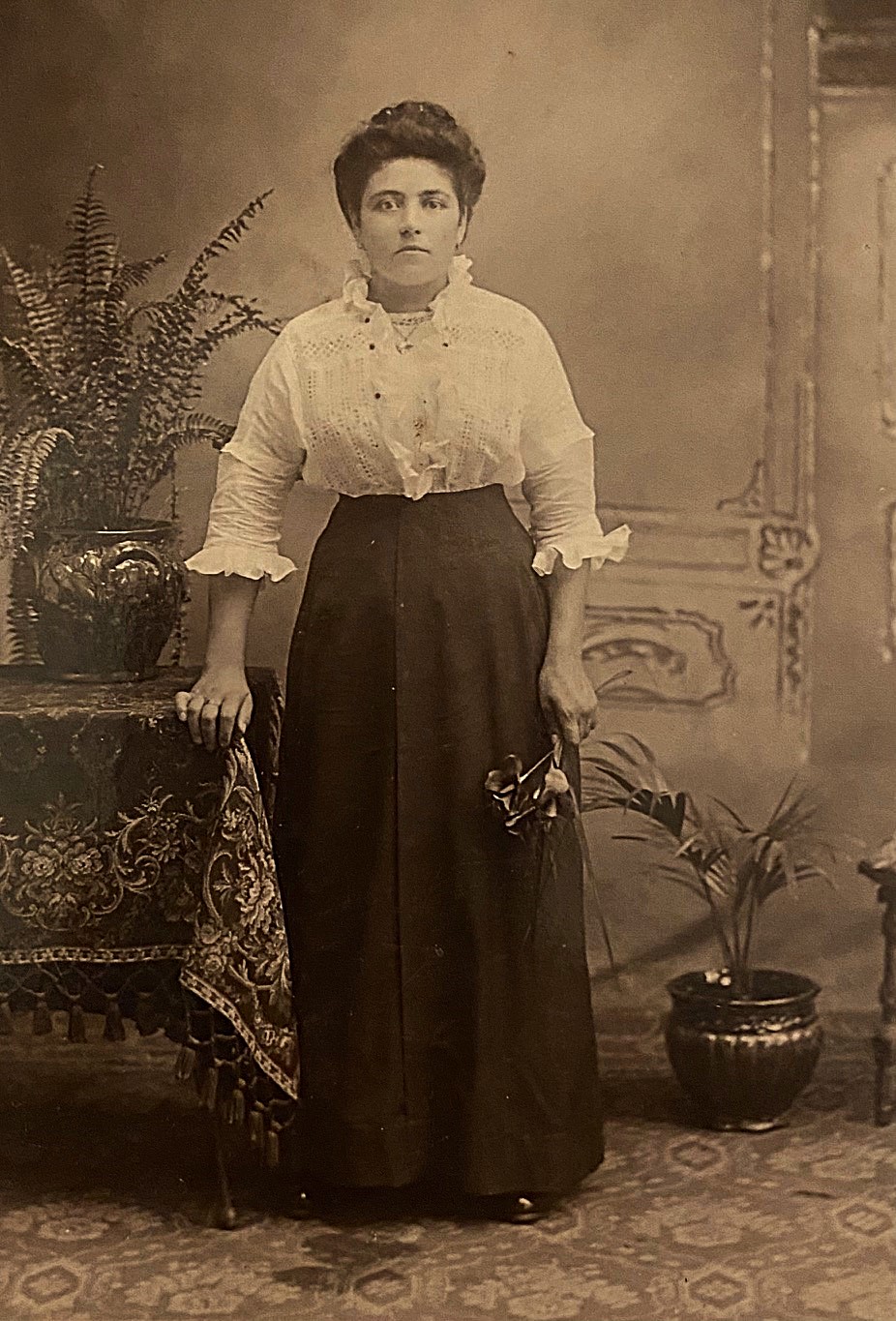
Our family was fortunate to have recorded several sessions of oral history with my maternal grandmother, Maria Ocneriu Popa, before she passed in 1979 at age 88. Her recollections were vivid and remarkably detailed, all the way back to her early childhood. I would like to share her memories of coming to America as a 22-year-old from Cristian, a quiet village in Romania.

In 1914, almost 1.2 million foreign-born people entered the United States. Two of them were Maria and her father, Vasile.  They left home in the dark on a Sunday in mid-March, taking a train to Hamburg, Germany. Our research with immigration records indicated they boarded the Hamburg-American Line’s S.S. President Lincoln. “We traveled third-class. I was seasick most of the trip,” she said. They reached New York harbor on April 3, after 15 days at sea. “My father, who was not in good health, was singled out by the doctors who noted his condition with a chalk mark on the back of his coat. This meant he might be returned to Romania.”

Maria and Vasile were detained at Ellis Island for “two or three weeks until the authorities received word from our relatives in Omaha that they would be responsible for us.” Finally reaching their destination, they stayed with Maria’s sister in an apartment in South Omaha. “I wasn’t interested in much of anything during those first few days, she lamented. “If I had the money, I would have returned to Romania. And if the health authorities had deported my father, I surely would have gone back home with him.”

What was Omaha, Nebraska, like back then? Poet Carl Sandburg was succinct in his 1915 depiction:

Omaha, the roughneck,
feeds armies, eats and
swears from a dirty face.
Omaha works to get the world
a breakfast.

Maria, age 22.

“I was able to find a job right away, working for Armour’s,” she remembers, “cutting big pieces of meat into little pieces for seven cents an hour.” During the early 1900s, Omaha was on the way to becoming the livestock and grain marketing center of the Midwest. Armour, along with other slaughterhouses like Swift and Cudahy, capitalized on an unskilled and inexperienced immigrant labor force willing to work for pennies a day.

Eventually, “by making friends and going to the Romanian dances on Sunday nights, I was able to get over my homesickness,” Maria said. Among the several Romanian suitors calling on her was Nicolae Popa, who arrived in New York in 1906. She did not recall the names of all the young men who proposed marriage, but Nicolae became Maria’s first and only choice. “When I went shopping for my wedding dress, my father and sister went with me,” Maria recalled. “The price was $10.00 for the dress. The veil was extra.”

When Maria was on the train to Hamburg, a woman from the nearby village of Apoldu de Jos boarded and sat next to her. “She asked where were we going and why was I crying. When I told her ‘to America,’ she said ‘Maybe you will meet a young man from my village there.’” She did.

Maria traveled almost five thousand miles to meet and marry a man who had concurrently grown up in a village within walking distance of her own. Often it seems, we have a plan for our lives, only to discover that God’s plan is different than ours. His thoughts for us are often much bigger than we realize, and His ways take us on paths we could never have imagined. And I rejoice that it is so.

You can add this to your My How Things Have Changed folder.

It’s that time of year again

30 Monday Sep 2024

Posted by michael schinker in Change, Fall, October, poem, Uncategorized

≈ Leave a comment

Crickets begin their one-note sonata
now in the lazy afternoon shade,
chirping through the night.
Monarchs are the butterfly kings,
floating above what’s left
blooming in the garden.
The neighbor’s ash tree hints
at what an early frost will yield
with a bough or two of yellow.
Porchlights go on a bit earlier
every evening.
If you’ve been around
The Midwest long enough
you know what’s coming.
It’s in the air; you can feel it.
Change.
Philosopher Heraclitus
said it is the only constant in life.
One not need be a sage
to realize the irony in that truth.

The calendar page
is about to turn to October. Again.   

Gone forever: The world of Norman Rockwell.

25 Wednesday Sep 2024

Posted by michael schinker in Uncategorized

≈ 1 Comment

I don’t know when it left. Maybe when he died, in 1978. I suspect maybe earlier, in the Sixties. Some readers may not even be familiar with the name, especially if you are younger than 50.

Norman Rockwell was a celebrated American painter and illustrator for over five decades. His works had a broad popular appeal for their reflection of the American culture of his time. He is most famous for his cover illustrations of everyday life created for The Saturday Evening Post magazine. He is also noted for his more than 60-year relationship with the Boy Scouts of America (when they were just boys), during which he produced covers for the organization’s publication Boys’ Life, for calendars and promotional posters.

Maybe his most recognizable piece even today is titled “Freedom From Want.” The composition depicts a traditional Thanksgiving dinner. Around the table, a multigenerational family eagerly gathers as the grandmother sets down what must be a 25-pound golden brown turkey while grampa stands behind, ready to carve it. It’s among my favorites, along with “Saying Grace,” which shows an older woman and a young boy pausing, heads bowed to pray before their meal, drawing curious glances from a wide demographic of fellow diners.

The art world of his day found Rockwell sentimental and out of touch. Many of his works continue to be denigrated by modern critics, especially the Post covers, which they say tend toward overly idealistic or romanticized past portrayals of American life. I disagree. I’m a Baby Boomer. I grew up in the Fifties, and lived what he painted.

Back in the day (that sounds so senior citizen-ish, because it is), automobiles were big and sleek, with large tailfins and a flowing design that mimicked the look of Space Race rockets. They had actual chrome bumpers but no seatbelts. They were gas guzzlers, but nobody cared because you could drive up to your neighborhood Texaco pumps and fill up the tank for five bucks, get your oil and tire pressure checked, and even have your windows washed by a friendly station attendant. Seriously.

 Few women actually went to work. They were housewives. Mom wore an apron while cooking and baking. Dad came home and read the newspaper. They both went to school PTA meetings. All together we watched a black and white TV on a screen inside of a piece of furniture called a console. We hurried through dinner and dishes to tune in to I Love Lucy, Gunsmoke and Father Knows Best (can you imagine such a sit-com in today’s anti-patriarchal culture?) I ran around the neighborhood dressed up like a cowboy — hat, boots and all, with cap guns blazing. We used pencils, paper and a 64-pack of crayons in grade school and learned about the practical value of civics, grammar and history. Movie theatres handed out special glasses so we could cringe viewing Creature from the Black Lagoon in 3-D. Ladies wore hats and gloves to church. Folks dressed up to go out to eat and to board an airplane, and if the flight was more than an hour long, were served a hot meal. You could smoke everywhere.

This storybook lifestyle had its share of dark pages, however. We worried about the Atomic Bomb and polio outbreaks and the Cold War. The civil rights injustices in the South were about to go national, and while freedom eventually won, the process was ugly.

Norman Rockwell was an original. No one has ever outdone him in a contemporary expression of everyday life elevated to an iconic level. I admire his efforts to chronicle a now bygone era. Gone forever.

What is the self-reflective and world view of the American identity today? Who is painting that, whatever it is? You’d have to be from outer space not to admit that our country has gradually abandoned traditional moral and ethical values, once celebrated as foundational to our stability as a society. When a culture decides that moral absolutes are too restrictive to personal freedom, then what replaces the behavioral compass in order to prevent getting lost in a dark maze of narcissistic relativism? Is there a way out? Does anyone actually want out?

So then if eventually everything inevitably changes, for better or worse, are there no absolutes, no constants? Perhaps not in the natural world, but I suggest you look into the supernatural: “I am the LORD, I change not,” is a verse from the most reliable source of truth, the Bible, in Malachi 3:6. Lamentations 3:22 declares that “The steadfast love of the Lord never ceases; his mercies never come to an end.” That’s Old Testament. The New Testament in Hebrews 13:8 says Jesus is the same “yesterday, today, and forever.” 

What a comfort to know that, while everything these days seems to toss us about in a raging sea of uncertainty and fear, we can drop an anchor of hope in an immutable God whose faithfulness is forever. (Heb. 6:16-20)

You can file this post in your
My How Things Have Changed folder.

More to come.

← Older posts
Newer posts →

Enter your email address to follow this blog and receive notifications of new posts by email.

Follow Crossing Paths on WordPress.com

Archives

  • February 2026 (1)
  • December 2025 (2)
  • November 2025 (2)
  • October 2025 (1)
  • September 2025 (2)
  • August 2025 (2)
  • June 2025 (1)
  • May 2025 (1)
  • April 2025 (1)
  • March 2025 (1)
  • January 2025 (1)
  • December 2024 (1)
  • November 2024 (1)
  • October 2024 (1)
  • September 2024 (3)
  • August 2024 (2)
  • July 2024 (1)
  • June 2024 (1)
  • April 2024 (1)
  • November 2023 (1)
  • September 2023 (1)
  • April 2023 (1)
  • January 2023 (1)
  • December 2022 (1)
  • December 2020 (1)
  • April 2020 (1)
  • January 2020 (1)
  • December 2019 (1)
  • June 2019 (1)
  • April 2019 (1)
  • December 2018 (2)
  • August 2018 (1)
  • March 2018 (1)
  • December 2017 (2)
  • October 2017 (2)
  • September 2017 (1)
  • August 2017 (2)
  • July 2017 (1)
  • April 2017 (1)
  • January 2017 (1)
  • December 2016 (2)
  • November 2016 (2)
  • September 2016 (1)
  • August 2016 (1)
  • May 2016 (1)
  • March 2016 (1)
  • February 2016 (1)
  • January 2016 (1)
  • December 2015 (2)
  • November 2015 (2)
  • September 2015 (2)
  • May 2015 (2)
  • April 2015 (3)
  • March 2015 (2)
  • February 2015 (1)
  • January 2015 (3)
  • December 2014 (6)
  • November 2014 (1)

Categories

  • 1914 (1)
  • 2017 (1)
  • 9/11 (1)
  • All Hallow's Eve (1)
  • Armageddon (1)
  • aspens (1)
  • assassination (1)
  • Auschwitz (1)
  • Aylan (1)
  • Bible (5)
  • Buddhist (2)
  • Celtic Christmas (1)
  • Change (1)
  • Charles Wesley (2)
  • Christmas (13)
  • Christmas Carol (3)
  • Christmas Day (5)
  • Communism (1)
  • crucifixion (1)
  • December (5)
  • earthquake (1)
  • Easter (3)
  • Election 2016 (1)
  • Everest (1)
  • Fall (1)
  • Flo and Kay Lyman (1)
  • Good Friday (1)
  • Happiness (3)
  • Holidays (4)
  • Holocaust (3)
  • humor in everyday life (1)
  • Hurricane Harvey (1)
  • Immigration (2)
  • ISIS (1)
  • Israel (3)
  • Jesus Christ (19)
  • John F. Kennedy (3)
  • Krystallnacht (1)
  • labels (3)
  • Life and death (14)
  • Live your purpose (3)
  • Manhood (1)
  • Mars (1)
  • Memorial Day (1)
  • Messiah (5)
  • miracles (1)
  • Mother's Day (1)
  • Nepal (1)
  • New Year's Eve (1)
  • Obsessions (3)
  • October (1)
  • pandemic (1)
  • peonies (1)
  • perceptions (3)
  • poem (12)
  • politics (3)
  • Prophecy (5)
  • Refugees (1)
  • religion (14)
  • rescue (1)
  • resurrection (2)
  • Rocky Mountains (1)
  • savantism (1)
  • Smashing Pumpkins (1)
  • Solstice (1)
  • Spring (3)
  • stars (2)
  • Stonehenge (1)
  • suffering (5)
  • Summer (1)
  • Super Moon (1)
  • terrorism (2)
  • Titanic (1)
  • Tolstoy (1)
  • tornadoes (1)
  • Ukraine (2)
  • Uncategorized (30)
  • vampires (1)
  • war (5)
  • winter (5)

Community

  • Unknown's avatar
  • Unknown's avatar
  • Unknown's avatar
  • DirtySciFiBuddha's avatar
  • Unknown's avatar
  • stevemonjarez's avatar
  • Unknown's avatar
  • CJ's avatar
  • ellisnelson's avatar
  • Unknown's avatar

Enter your email address to subscribe to this blog and receive notifications of new posts by email.

Join 78 other subscribers

Blog at WordPress.com.

  • Subscribe Subscribed
    • Crossing Paths
    • Join 78 other subscribers
    • Already have a WordPress.com account? Log in now.
    • Crossing Paths
    • Subscribe Subscribed
    • Sign up
    • Log in
    • Report this content
    • View site in Reader
    • Manage subscriptions
    • Collapse this bar
 

Loading Comments...